

Do you have a technical challenge? Get in touch with us
Geotechnical investigation
Structural monitoring
All industries
Geotechnical testing and structural monitoring ensure building safety and minimize the risk of settlement or damage. Forecasting and precise measurements allow for project optimization and cost reduction in future maintenance.
Computational forecasts, pile load tests, and settlement analysis enable better adaptation of foundations to soil conditions. Our solutions support risk management and enhance the durability of building structures.
Structural monitoring and foundation testing are crucial for energy facilities such as power plants and wind farms. Our technologies help control the impact of vibrations on critical infrastructure and verify the quality of geotechnical work.
Pile load testing is carried out at an early stage of bridge construction. Continuous monitoring and structural analysis help detect damages in bridges, viaducts, and roads early, increasing user safety and optimizing maintenance costs.
Vibration measurements and track monitoring assess the impact of loads on the stability of embankments and railway bridges. Our studies help minimize failure risks and enhance the durability and safety of railway infrastructure.
Deformation and displacement monitoring provide real-time safety assessments of tunnels during construction and operation. Our research helps mitigate risks related to settlement, leakage, and other structural damages.
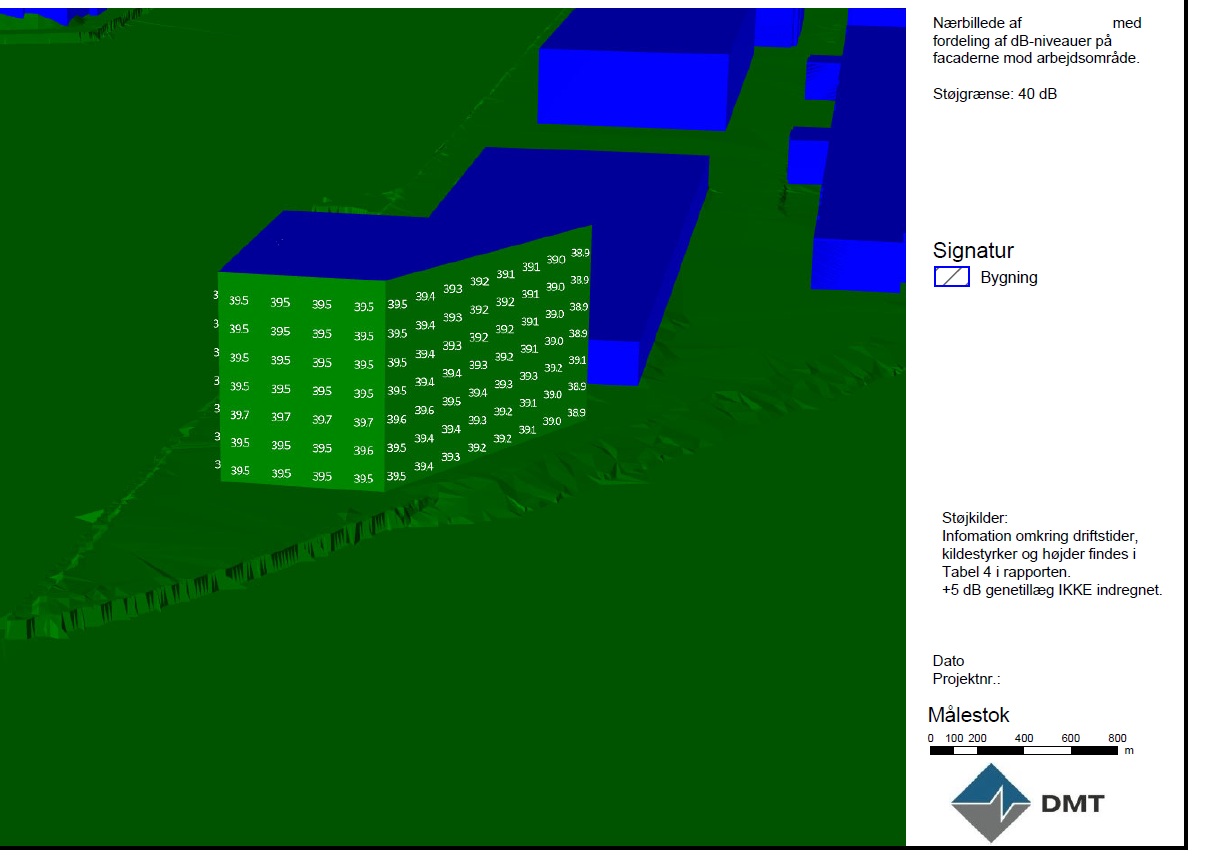
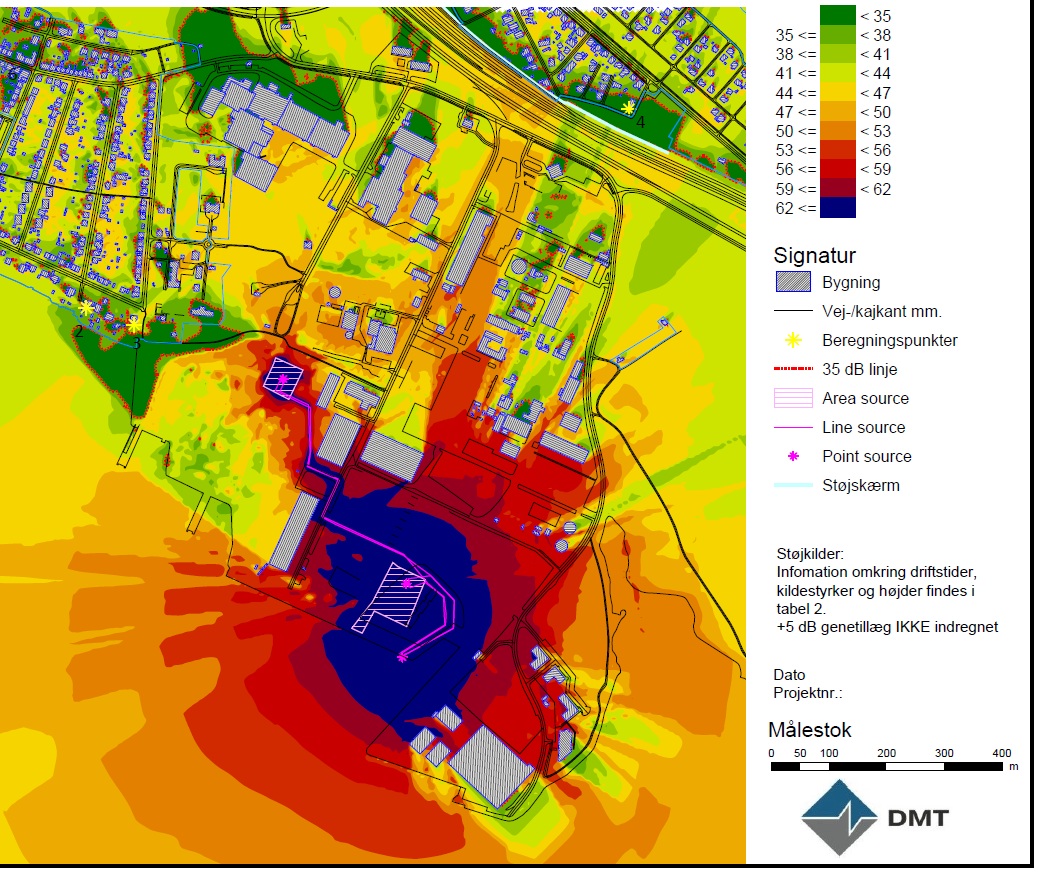
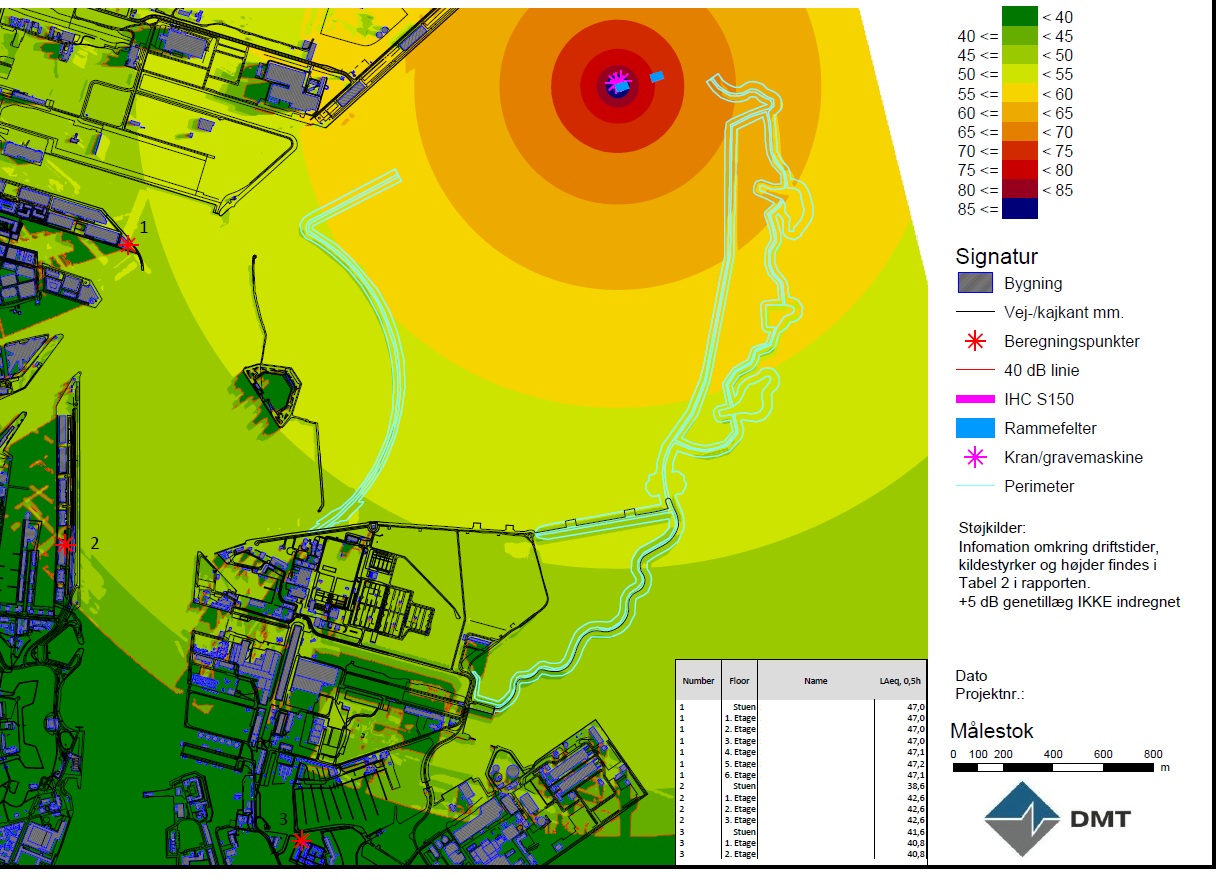
A noise calculation is a 3D model-based assessment of how noise from a company, construction site, or infrastructure project will affect the surrounding environment.


How is a noise calculation used?
It is typically used when you need to document noise conditions for authorities, neighbours, or other stakeholders - or when you want to prevent potential issues before they arise through proper planning.
With a noise assessment, we can predict, document, and visualize how noise from a company, construction site, machine, or infrastructure project affects the surrounding environment. The assessment can be used during the early planning stages, in discussions with authorities, and as documentation for neighbours or other stakeholders.
In practice, noise assessments are often used to create a shared basis for decision-making between the client, consultant, contractor, authorities, and neighbours. When the noise impact has been visualized and documented, it becomes easier to discuss concrete solutions rather than assumptions.
Documentation related to permits, environmental approvals, changes to permit conditions, or regulatory orders.
Assessment of work phases, operating hours, equipment locations, and realistic scenarios.
Overview of the noise impact on residential properties and other noise-sensitive receptors.
Assessment of noise barriers, container walls, modified operations, reduced working hours, or alternative working methods.
Comparison of different scenarios, enabling the project to be optimized at an early stage and helping to prevent unnecessary conflicts.
Industrial noise and construction and infrastructure projects:
For industrial noise, noise calculations are often used in connection with environmental permits, changes to permit conditions, complaints, and enforcement notices, where noise levels must be assessed during daytime, evening-time, and night-time periods.
For construction and infrastructure projects, noise calculations can be used to plan project phases, select appropriate machinery, assess the need for permits, and target noise mitigation measures, ensuring that efforts are focused where they will have the greatest impact.
Noise is not just noise, which is why it is important that the assessment is based on the right assumptions and the appropriate evaluation methodology from the outset.

Identification of relevant machinery, equipment, vehicles, installations, and work processes.
Assessment of operating hours, load levels, number of units, work phases, and realistic scenarios.
Identification of the scenarios expected to generate the greatest noise impact.
Identification of relevant neighbours, residential properties, businesses, institutions, and other noise-sensitive receptors.
Assessment of which limit values, reference periods, and methodologies are relevant to the project.

A good result particularly requires:
When there is a need to document or predict the noise impact from an activity, business, construction site, or piece of equipment. This may be required in connection with regulatory requirements, environmental permits, complaints, neighbour considerations, or project planning.
Yes. In many cases, the process begins by establishing an overview of the noise sources, operations, locations, and relevant receptors. We help assess which information is required and which assumptions and conditions need to be clarified.
A noise measurement documents the actual noise conditions at a specific point in time. A noise assessment can be used to predict noise from planned activities, compare different scenarios, and evaluate the effectiveness of noise mitigation measures.
Lorem ipsum dolor sit amet, consectetur adipiscing elit.
Korem ipsum dolor sit amet, consectetur adipiscing elit. Nunc vulputate libero et velit interdum, ac aliquet odio mattis. Class aptent taciti sociosqu ad litora torquent per conubia nostra, per inceptos himenaeos. Curabitur tempus urna at turpis condimentum lobortis. Ut commodo efficitur neque. Ut diam quam, semper iaculis condimentum ac, vestibulum eu nisl.


Filter by service:
Tutaj znajdziesz kluczowe materiały techniczne, w tym instrukcje, artykuły eksperckie i dokumentację. Udostępniamy rzetelne informacje wspierające inżynierów i inwestorów w podejmowaniu świadomych decyzji. Skorzystaj z wiedzy, która pomaga w planowaniu, realizacji i eksploatacji konstrukcji.
We’ve already solved many problems, and for new ones, we’ll develop an individual approach. Want to discuss monitoring or pile testing? Fill out the form and let us know.
Geotechnical investigation
We operate in Europe as:
DK
DMT Engineers A/S
DMT Engineers A/S
Skomagervej 13C
7100 Vejle
CVR-np. 12476779
DE
DMT Ingenieure GmbH
DMT Ingenieure GmbH
Zum Audorfer See 9
D-24782 Büdelsdorf
Registergericht: Amtsgericht Kiel HRB 12196 KI
Geschäftsführer: Lars Gøttrup Christensen
USt-IdNr.: DE134866110
Sitz der Gesellschaft: Zum Audorfer See 9, D-24782 Büdelsdorf
All rights reserved. DMT 2025.
Geotechnical testing and structural monitoring ensure building safety and minimize the risk of settlement or damage. Forecasting and precise measurements allow for project optimization and cost reduction in future maintenance.
Computational forecasts, pile load tests, and settlement analysis enable better adaptation of foundations to soil conditions. Our solutions support risk management and enhance the durability of building structures.
Structural monitoring and foundation testing are crucial for energy facilities such as power plants and wind farms. Our technologies help control the impact of vibrations on critical infrastructure and verify the quality of geotechnical work.
Pile load testing is carried out at an early stage of bridge construction. Continuous monitoring and structural analysis help detect damages in bridges, viaducts, and roads early, increasing user safety and optimizing maintenance costs.
Vibration measurements and track monitoring assess the impact of loads on the stability of embankments and railway bridges. Our studies help minimize failure risks and enhance the durability and safety of railway infrastructure.
Deformation and displacement monitoring provide real-time safety assessments of tunnels during construction and operation. Our research helps mitigate risks related to settlement, leakage, and other structural damages.