Do you have a technical challenge? Get in touch with us
Geotechnical investigation
Structural monitoring
All industries
Geotechnical testing and structural monitoring ensure building safety and minimize the risk of settlement or damage. Forecasting and precise measurements allow for project optimization and cost reduction in future maintenance.
Computational forecasts, pile load tests, and settlement analysis enable better adaptation of foundations to soil conditions. Our solutions support risk management and enhance the durability of building structures.
Structural monitoring and foundation testing are crucial for energy facilities such as power plants and wind farms. Our technologies help control the impact of vibrations on critical infrastructure and verify the quality of geotechnical work.
Pile load testing is carried out at an early stage of bridge construction. Continuous monitoring and structural analysis help detect damages in bridges, viaducts, and roads early, increasing user safety and optimizing maintenance costs.
Vibration measurements and track monitoring assess the impact of loads on the stability of embankments and railway bridges. Our studies help minimize failure risks and enhance the durability and safety of railway infrastructure.
Deformation and displacement monitoring provide real-time safety assessments of tunnels during construction and operation. Our research helps mitigate risks related to settlement, leakage, and other structural damages.
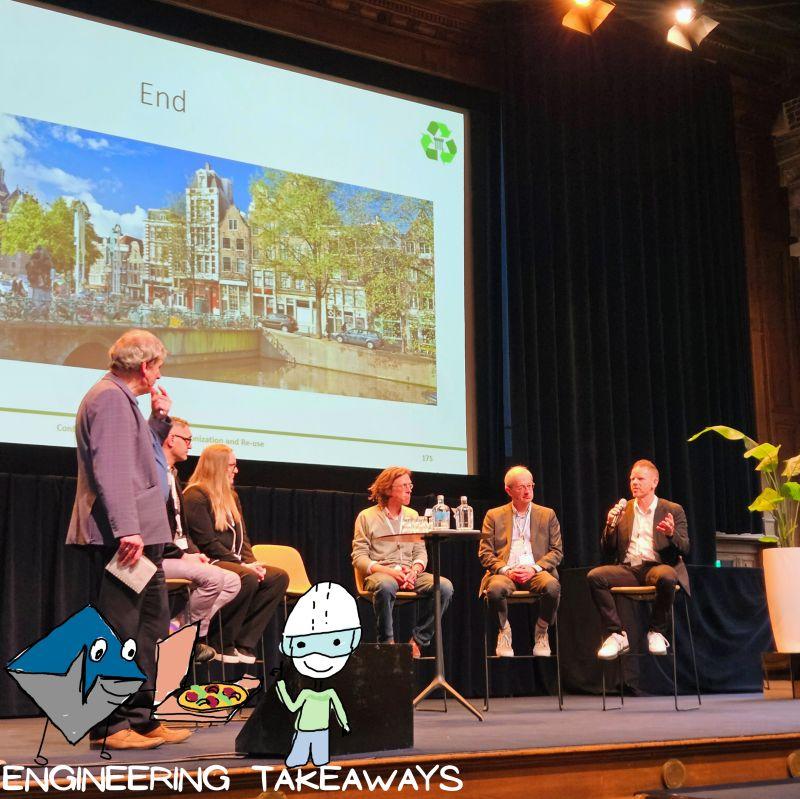
What is the connection between resource reuse and the projects we deliver? And is it actually possible to extend an existing building with 6 additional floors by reusing the existing foundation piles? These questions formed the framework for our participation this week in Amsterdam during Conference on Foundation Decarbonization and Re-use.


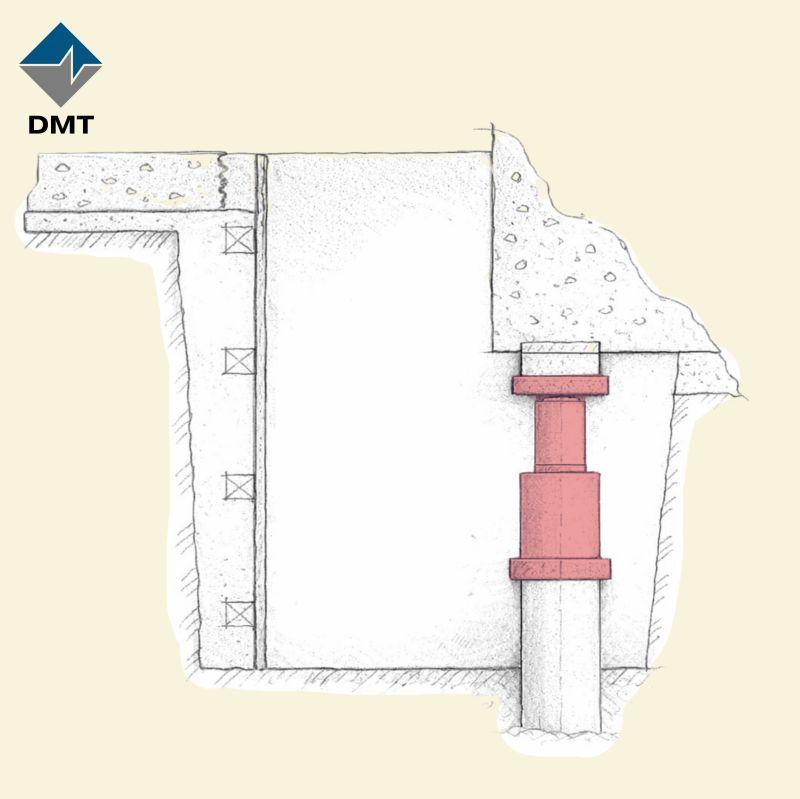
The purpose of the project was to verify the load-bearing capacity of piles driven in 2002.
With a subsoil primarily consisting of clay, the expectation was that the load-bearing capacity had increased sufficiently over time to handle the load from six new floors. The tests were carried out while the building was in full operation, which placed high demands on both planning and execution. Through thorough preparation and strong coordination, the work was completed efficiently and safely 💪🏼 Four piles were tested. The result? No significant increase in load-bearing capacity was observed.

Key learnings from the project:
• Thorough documentation is essential – geological data, pile records, and precise pile positioning proved to be absolutely critical
• Continuous monitoring is necessary when existing structures are affected
• Buildings change function over time – therefore, future adaptation and reuse should be considered early
For us, a responsible approach to construction is not only about new materials and solutions – it is just as much about understanding, testing, and optimizing what already exists.

Conclusion:
The project shows that reuse of existing foundation piles cannot be based on assumptions of increased load-bearing capacity over time – it requires documentation and verification. Although the potential for resource savings and decarbonization is significant, it is crucial to work in a data-driven and risk-aware manner when bringing existing structures into play.
At DMT, this means we actively contribute to decarbonization by investigating and optimizing the use of existing foundations – but always with a focus on safety, documentation, and realistic assessments of load-bearing capacity. Reuse is an important part of the solution, but only when it is technically sound.


Filtruj po usłudze:
Filtruj po branży:
Tutaj znajdziesz kluczowe materiały techniczne, w tym instrukcje, artykuły eksperckie i dokumentację. Udostępniamy rzetelne informacje wspierające inżynierów i inwestorów w podejmowaniu świadomych decyzji. Skorzystaj z wiedzy, która pomaga w planowaniu, realizacji i eksploatacji konstrukcji.
We’ve already solved many problems, and for new ones, we’ll develop an individual approach. Want to discuss monitoring or pile testing? Fill out the form and let us know.
Geotechnical investigation
We operate in Europe as:
DK
DMT Engineers A/S
DMT Engineers A/S
Skomagervej 13C
7100 Vejle
CVR-np. 12476779
DE
DMT Ingenieure GmbH
DMT Ingenieure GmbH
Zum Audorfer See 9
D-24782 Büdelsdorf
Registergericht: Amtsgericht Kiel HRB 12196 KI
Geschäftsführer: Lars Gøttrup Christensen
USt-IdNr.: DE134866110
Sitz der Gesellschaft: Zum Audorfer See 9, D-24782 Büdelsdorf
All rights reserved. DMT 2025.
Geotechnical testing and structural monitoring ensure building safety and minimize the risk of settlement or damage. Forecasting and precise measurements allow for project optimization and cost reduction in future maintenance.
Computational forecasts, pile load tests, and settlement analysis enable better adaptation of foundations to soil conditions. Our solutions support risk management and enhance the durability of building structures.
Structural monitoring and foundation testing are crucial for energy facilities such as power plants and wind farms. Our technologies help control the impact of vibrations on critical infrastructure and verify the quality of geotechnical work.
Pile load testing is carried out at an early stage of bridge construction. Continuous monitoring and structural analysis help detect damages in bridges, viaducts, and roads early, increasing user safety and optimizing maintenance costs.
Vibration measurements and track monitoring assess the impact of loads on the stability of embankments and railway bridges. Our studies help minimize failure risks and enhance the durability and safety of railway infrastructure.
Deformation and displacement monitoring provide real-time safety assessments of tunnels during construction and operation. Our research helps mitigate risks related to settlement, leakage, and other structural damages.